Five Things You Didn't Know About How Candy Is Made
Ever wonder what goes on behind the scenes at a candy factory? While Willy Wonka may have taken some creative liberties, the real-world process of candy making is fascinating in its own right. Here are five surprising facts about how your favorite sweet treats come to life!
1. The Secret Life of Chocolate Crystals

Did you know that chocolate has to be “tempered” at specific temperatures to create the perfect crystal structure? Without this crucial step, your chocolate bar would look dull, feel grainy, and melt way too easily in your hands. Master chocolatiers spend years learning how to coax cocoa butter into forming the right type of crystals.
The process involves carefully heating chocolate to around 115°F to melt all existing crystals, then cooling it to about 81°F to form the good crystals, before finally warming it slightly to eliminate any unwanted crystal formations. It’s basically like being a chocolate scientist!
2. The Incredible Shrinking Gummy Bears
Those chewy little bears you love actually start out much bigger! When gummy candies are first molded, they’re about 20% larger than their final size. As they cure and dry over several days, they shrink down to the perfect bite-sized treats we know and love.
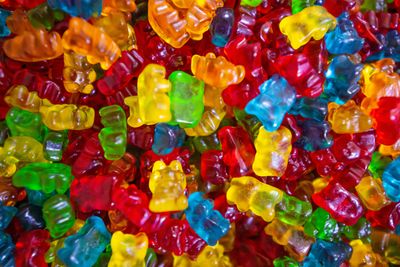
This shrinking process is crucial for achieving that signature gummy texture. If you tried to eat them right after they’re molded, they’d be too soft and sticky. The drying time allows the gelatin to set properly and creates that satisfying bounce when you bite into them.
3. The Cotton Candy Time Machine

Here’s something wild: the machine that makes cotton candy was actually invented by a dentist! Dr. Morrison teamed up with a candy maker named John C. Wharton in 1897 to create the first electric cotton candy machine. They originally called it “Fairy Floss,” which is still what it’s called in Australia today.
The process is actually pretty mind-bending when you think about it. The machine melts regular sugar and spins it through tiny holes at about 3,500 rotations per minute. The liquid sugar solidifies into threads thinner than human hair as it cools in the air. It’s basically like a spider web made of pure sugar!
4. The Hard Candy Color Code
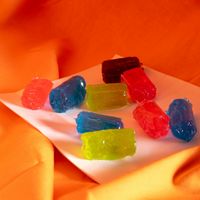
Ever notice how hard candies have such vibrant, perfectly uniform colors? There’s actually a scientific reason why candy makers are so precise about color temperature. The exact shade of the candy can tell them whether it’s reached the right temperature, even before using a thermometer.
As sugar syrup heats up, it goes through distinct stages that candy makers have used for centuries: thread, soft ball, firm ball, hard ball, soft crack, and hard crack. Each stage corresponds to a specific temperature range and determines what kind of candy you’ll end up with. Get it wrong by just a few degrees, and you might end up with a sticky mess instead of a perfect lollipop!
5. The Jelly Bean Double Life
Would you believe that it takes up to two weeks to make a single jelly bean? These little candies actually live two completely separate lives during production. First, the chewy centers are formed and left to cure for several days. Then, they’re put through a process called “panning” where they’re tumbled in a giant rotating drum while layer after layer of sugar shell is built up around them.
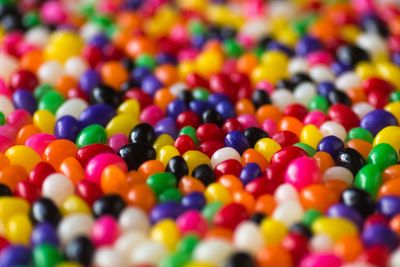
The really crazy part? Each jelly bean gets dozens of layers of coating, almost like how a pearl forms in an oyster. The candy makers have to carefully control the humidity and temperature throughout the whole process, or the shells could crack or become too thick. Next time you bite into a jelly bean, think about its two-week journey to perfection!
Now you know some of the secrets behind your favorite sweets! The next time you unwrap a piece of candy, you’ll appreciate just how much science, skill, and patience went into creating that little moment of joy.